
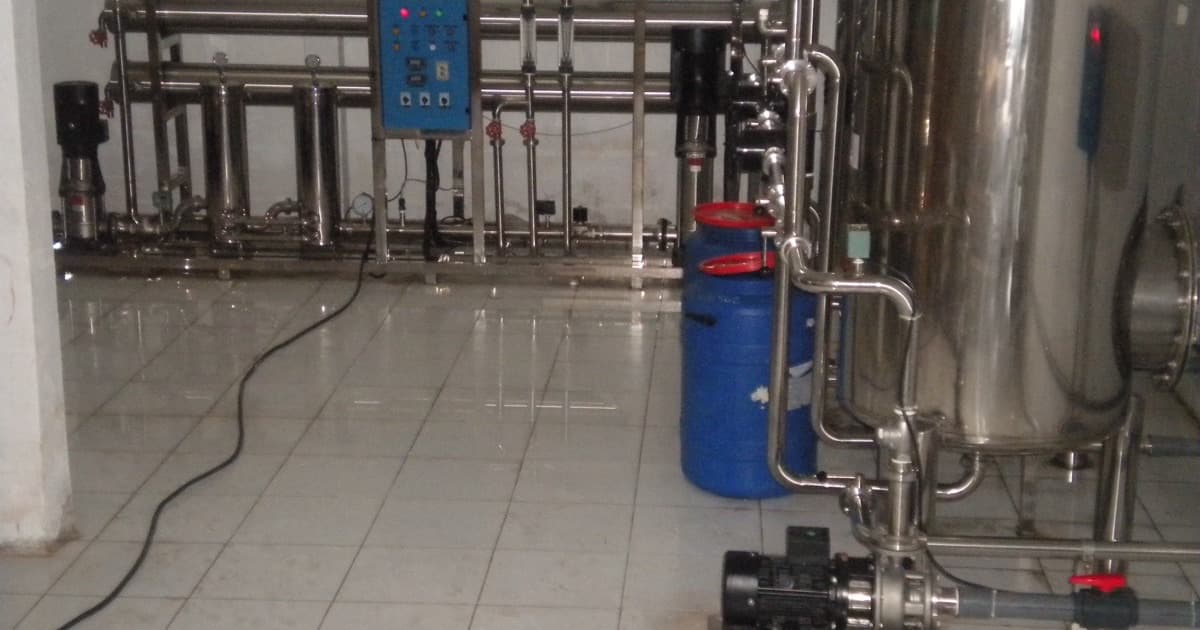
A reverse osmosis install in Sarasota County goes faster and cleaner when you know what is happening at each stage. Most under sink RO installs run 2 to 4 hours on the day, with another 24 to 48 hours of flushing before you drink the water. Whole house RO with a storage tank and booster pump runs 4 to 8 hours, plus a return visit. This guide covers what to expect, what to prep, and what to verify before the installer leaves. Tampa Bay installs follow the same pattern, with slightly different permit triggers in Hillsborough and Pinellas counties.
What an RO System Actually Does
A reverse osmosis system pushes water through a semipermeable membrane with pores small enough to block dissolved solids, including chlorine byproducts, sodium, fluoride, lead, PFAS, and most pesticide residues. A typical under sink system has five stages: sediment pre filter (catches grit), carbon pre filter (removes chlorine before it can damage the membrane), the RO membrane itself, a storage tank that holds 2 to 4 gallons of treated water, and a post carbon polishing filter that removes any residual taste.
For Sarasota County water, the RO system handles the contaminants a softener cannot. A softener removes hardness. RO removes dissolved solids including sodium added by a softener, which is why most Sarasota County households install both: softener on the whole house, RO at the kitchen sink for drinking, cooking, ice, and coffee. See our <a href="/reverse-osmosis">reverse osmosis service page</a> for system options and the <a href="/articles/reverse-osmosis-vs-whole-house-filter">RO vs whole house comparison</a> for the tradeoffs.
Before the Install Day: Homeowner Checklist
A clean install starts with the cabinet under the kitchen sink fully cleared. Move the trash bin, pull out trays, cleaning supplies, and anything stored on the cabinet floor. The installer needs a clear 24 by 18 inch floor area to mount the manifold and storage tank, plus shoulder room to drill through the cabinet wall and the countertop.
Verify the cold water shut off valve under the sink turns smoothly. If it is corroded or stuck, the installer will replace it for $40 to $80 in materials, which is faster done up front than discovered halfway through the install. Run the disposal for a few seconds to confirm it works, since the installer will tap the drain line just above the disposal trap. Pets should be in a closed room during drilling.
Have your most recent water bill or well report handy. The installer will baseline TDS (total dissolved solids) before install using a handheld meter, and compare to the post install reading. Sarasota County municipal supply typically reads 250 to 450 ppm TDS pre RO, dropping to 5 to 20 ppm post RO. Wells vary much more widely.
What Happens on Install Day, Hour by Hour
Hour zero, the installer arrives, walks the kitchen, confirms the shut off valve, and lays a tarp under the sink. The TDS baseline is read and recorded. Hour one, the installer drills the faucet hole through the countertop using either an existing soap dispenser hole or a fresh hole in granite, quartz, or stainless. Granite and quartz need a diamond bit and patience, which is why the installer typically schedules 30 minutes for this step alone.
Hour two, the installer mounts the manifold to the cabinet wall or floor, taps the cold water supply with a self piercing saddle valve or a tee fitting, runs the drain line into the disposal flange or a separate air gap fitting, and connects the four flexible color coded tubes. Hour three, the storage tank is filled and the system is pressure tested for 15 minutes with the dedicated faucet open. The first tank of water is flushed entirely. Hour four, the installer walks you through the system, hands over the filter change schedule, and answers questions.
Whole house RO installs add a booster pump, a 40 to 80 gallon storage tank usually mounted in the garage, and tie ins to the main supply line and house drain. Those add 2 to 4 hours and require a permit in most Sarasota County jurisdictions.
Recommended Method: Match RO Type to Your Needs
| If you want to treat | System type | Install time | Permit usually needed |
|---|---|---|---|
| Drinking and cooking water only | Under sink point of use RO | 2 to 4 hours | No in most Sarasota County |
| Drinking plus refrigerator ice and water | Under sink RO with fridge line | 3 to 5 hours | No in most Sarasota County |
| All household water including showers | Whole house RO with booster and storage | 4 to 8 hours plus return visit | Yes, plumbing permit required |
| Well water with high TDS or PFAS | Whole house RO with extra pre treatment | 6 to 10 hours over 2 visits | Yes, includes well disinfection |
Permits in Sarasota County
Point of use under sink RO units that tap an existing cold water supply with an angle stop and use the disposal drain do not require a permit in Sarasota County, the City of Sarasota, North Port, or Venice. The install is considered a fixture connection, not a system modification. Whole house RO with a new tie in to the main supply line, a booster pump, or a discharge to the sanitary drain does require a plumbing permit pulled by the licensed installer.
A permit pull in Sarasota County typically adds $75 to $200 to the install cost, depending on jurisdiction. The licensed installer handles the application, schedules the inspection, and provides the inspection card for your records. This paperwork matters at home resale, because permitted whole house water treatment counts as a documented improvement in most appraisals.
Day After: Flush and Taste
Do not drink the first 24 to 48 hours of water from the new system. The membrane and carbon stages need to flush out manufacturing residue and protective coatings. Your installer should empty the first storage tank fully in front of you. Plan to dump the next 2 to 3 tanks by running the dedicated faucet for 5 minutes at a time, waiting for the tank to refill, and repeating.
Flavor improvement is noticeable by tank 3 or 4. By tank 5 the water should taste clean and slightly flat compared to mineral rich tap water. Some Sarasota County homeowners initially miss the mineral taste and add a remineralization cartridge to the system, which adds calcium and magnesium back at controlled levels for taste. That upgrade runs $60 to $150 in parts and 30 minutes of labor at the next filter change.
Verifying the Install Before the Installer Leaves
Run through a five point check before signing off. Point one: TDS reading at the dedicated faucet should be under 30 ppm on city water, under 50 ppm on well water. Point two: no visible drips at any of the four fittings under the sink after 15 minutes of system operation. Point three: the drain saddle (or air gap) makes no gurgling sound during a fill cycle. Point four: the dedicated faucet flows at a steady 0.5 to 1 gallon per minute, not just a trickle. Point five: you have written documentation of the filter change schedule and the membrane warranty terms.
If anything fails the check, fix it before the installer leaves. A return visit to chase a slow drip or a wrong size fitting costs you a service call window and the installer time. Most reputable Sarasota County installers welcome the walkthrough because it surfaces issues while the tools are still on site.
Maintenance Schedule After Install
Sediment pre filter, every 6 to 12 months. Carbon pre filter, every 6 to 12 months. RO membrane, every 2 to 5 years depending on incoming TDS. Post carbon polishing filter, every 12 months. Storage tank sanitization, every 12 to 24 months. Most installers offer a yearly maintenance plan for $150 to $300 that bundles all filter changes, the sanitization, and a TDS verification. That is the easiest way to keep a system in spec for the 12 to 15 year design life.
If you prefer DIY, the sediment and carbon pre filters are simple to change with the included wrench, take about 10 minutes, and run $40 to $80 a year in cartridges. The RO membrane and storage tank sanitization are still best handled by a licensed installer.
Call a Professional If
Your home is on a private well rather than Sarasota County municipal water. Wells need a full lab panel before sizing an RO system, because high iron, manganese, or hardness will destroy a standard membrane in months. Your supply pressure is below 40 psi static, which means the RO will produce slowly and may need a booster pump. You want whole house RO rather than point of use, which is permit territory and well outside DIY scope.
Also call a pro if you have a tankless water heater, since the cold water tap for the RO has to be located ahead of the heater feed in a way DIY guides often get wrong. And if you live in a condo with shared plumbing, the HOA may have rules about discharge to common drains that a licensed installer knows how to navigate.
What This Costs in 2026
A standard under sink RO system installed in Sarasota County runs $600 to $1,400 in 2026. The spread covers basic 4 stage to premium 6 stage with remineralization. Whole house RO with booster pump and storage tank runs $3,500 to $7,500 installed. A pairing of whole house softener plus point of use RO at the kitchen, which is the most common Sarasota County setup, totals $2,800 to $4,500 installed. See the <a href="/pricing">pricing page</a> for current ranges and the <a href="/financing">financing options</a> page for monthly payment terms.
For the broader water treatment picture, see our <a href="/articles/reverse-osmosis-vs-water-softener">RO vs water softener comparison</a> and the <a href="/articles/water-softener-in-tampa-bay-fl">Tampa Bay water softener overview</a>. The <a href="/articles/water-softener-vs-water-conditioner">softener vs conditioner</a> article covers why most homes benefit from both treatments working together.
Service Area
Pure Viva installs reverse osmosis systems across Sarasota County (Sarasota, Venice, North Port) and throughout <a href="/service-areas">Tampa Bay</a>. See the dedicated <a href="/water-softener-in-sarasota-county-fl">Sarasota County water treatment page</a> for area specific details, the <a href="/faq">FAQ page</a> for common pre install questions, and the <a href="/water-softener-in-tampa-bay-fl">Tampa Bay page</a> if you live north of the county line.
Common RO Install Mistakes That Cost You Later
Five mistakes show up repeatedly in Sarasota County. Mistake one: using a self piercing saddle valve on the cold supply. These are quick to install but fail at the puncture point within 3 to 5 years and require shutting down the cabinet to replace. A proper tee fitting at the angle stop costs 10 extra minutes and lasts the life of the system.
Mistake two: skipping the air gap on the drain saddle. Most municipal codes in Sarasota County require an air gap between the RO waste line and the disposal flange to prevent backflow contamination. A licensed installer will include it. A handyman often will not.
Mistake three: oversizing the storage tank without checking pressure. A bigger tank (4 gallons vs 2 gallons) sounds better but only works if your incoming pressure is above 50 psi. On low pressure Sarasota County supply lines, a smaller tank fills faster and feels more responsive at the faucet.
Mistake four: choosing a 4 stage instead of a 5 or 6 stage. The 4 stage saves $80 to $150 up front but skips the post carbon polishing filter, so the water tastes slightly plastic for the first month. The 5 stage includes the polish. The 6 stage adds remineralization. For most Sarasota County households, a 5 stage is the right floor.
Mistake five: installing the system without a TDS meter handoff. A handheld TDS meter costs $15 and lets you spot check the system every few months. If the post RO TDS climbs from 15 ppm at install to 60 ppm a year later, the membrane is fouling and needs replacement. Without the meter, the first sign is bad tasting water months later.
Replacing an Existing RO System vs Fresh Install
A replacement RO install in Sarasota County is faster (1.5 to 2.5 hours) and cheaper ($400 to $900) than a fresh install because the faucet hole, drain saddle, and supply tap are already there. The installer pulls the old manifold, cleans the cabinet, mounts the new one, swaps the storage tank if it is more than 8 years old (the bladder degrades), and pressure tests.
If your existing RO is the original system from a 1990s or early 2000s home, plan to replace the storage tank as part of the upgrade. Old tanks often hold a fraction of their rated capacity because the bladder has stiffened. A new 3.2 gallon storage tank runs $60 to $120 and dramatically improves flow at the faucet.
If your existing RO faucet is brushed nickel and your kitchen is now matte black, mention the finish change up front. A new faucet adds $40 to $200 and 20 minutes to the install. Most installers carry common finishes on the truck.
When Whole House RO Makes Sense in Sarasota County
Most Sarasota County homes do not need whole house RO. A softener handles hardness everywhere in the house, and a point of use RO handles drinking water at the kitchen. The combination is cheaper, more efficient, and easier to maintain than a whole house RO.
Whole house RO is the right answer in three specific situations. Situation one: private well water with TDS above 1,500 ppm or high sodium. A softener trades calcium for sodium, which compounds an already high sodium problem. Whole house RO removes both. Situation two: skin or health sensitivities that require treated water at the shower (eczema, certain immune conditions). Point of use RO does not reach the shower. Situation three: very high contaminant load (PFAS hotspots, nitrate above 10 ppm, chloride above 250 ppm) where treating at every tap is the simplest path.
For a typical Sarasota County municipal home with moderate hardness and city water TDS in the 250 to 450 range, whole house RO is overkill and runs 3 to 5 times the cost of a softener plus point of use RO combination. See our <a href="/water-filtration">water filtration overview</a>, the <a href="/services/whole-house-filtration">whole house filtration service page</a>, and the <a href="/services/water-softeners">water softener service page</a> for the pieces that usually fit together better than whole house RO.
Schedule your Sarasota County RO install
Free in home consultation, TDS baseline test, and a written quote with a fixed install date. Permits handled if needed. Call (941) 367-2354 or use the contact form.
Book the Consultation