
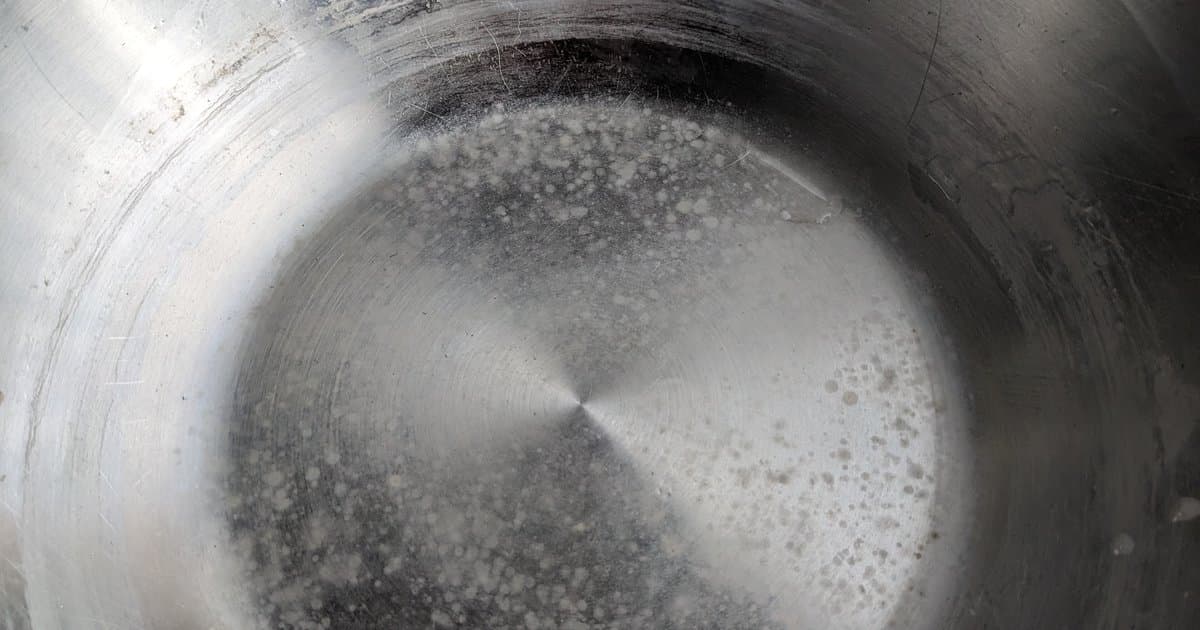
White spots on the dishwasher, a chalky ring around the showerhead, a film on the shower door that fights back against any spray cleaner. In Tampa Bay these symptoms almost always trace back to one cause: hard water in the 15 to 25 grains per gallon range. This diagnostic walks through how to confirm hardness is the culprit, separate hardness from look alike issues (chloramine residue, sediment, low rinse aid), and pick the right fix without overbuying. Sarasota County water tests similarly to Tampa Bay, so the same diagnostic applies in Venice, North Port, and Sarasota proper.
Why Tampa Bay Water Causes Spots
Tampa Bay Water sources its supply from a blend of surface water, groundwater from the Floridan and surficial aquifers, and seawater from the Apollo Beach desalination plant. The limestone aquifer is the biggest hardness contributor. Calcium and magnesium dissolve into the supply at the wellfield, ride along through the distribution system, and end up at your tap at 15 to 25 grains per gallon. That is firmly in the hard range on every standard scale.
When water evaporates from a surface, the dissolved minerals stay behind. On a glass at room temperature this leaves a thin haze. On a faucet that drips for hours it leaves a visible crust. On a dishwasher heating element at 130 to 150 degrees it deposits hardened scale layer by layer. Same chemistry, three different visual outcomes.
Step 1: Confirm the Spots Are Mineral, Not Soap
Before assuming hardness, rule out the two look alikes. Etched glassware (irreversible cloudiness) is caused by long term exposure to soft water with too much detergent, the opposite problem. A faint rainbow film on dishes is often dishwasher rinse aid depletion, fixable for two dollars at the grocery store. Streaky residue on shower glass that wipes off easily with vinegar is hardness. A hard chalky deposit that resists vinegar for the first minute and dissolves slowly is heavy hardness scale.
A 30 second home test settles it. Drip white vinegar onto the deposit. If it fizzes lightly and dissolves over 10 to 60 minutes, you are looking at calcium carbonate, which means hard water. If nothing happens, the deposit is something else, often silica or detergent residue, and a softener will not fix it.
Step 2: Get a Hardness Number
Once you know it is mineral scale, get a grains per gallon reading. Three options, in increasing accuracy and effort. Test strip kits from a hardware store cost $10 and give a color chart reading in 30 seconds, accurate to within 3 to 5 gpg. A licensed installer will do a free in home hardness test on the spot using a titration kit, accurate to within 1 gpg. A certified Florida lab will run a full water panel for $40 to $120 that covers hardness plus chlorine, chloramine, iron, manganese, TDS, and pH.
For most Tampa Bay homes the free in home test is enough. Lab panels matter when you also suspect well water issues (iron staining, sulfur smell) or you want a PFAS or chloramine baseline. Book a test through our <a href="/services/water-testing">water testing service</a> or the <a href="/contact">contact form</a>.
| Hardness Reading | What You Will See | Right Fix |
|---|---|---|
| 0 to 3 gpg (soft) | No spots, mild soap film | Nothing needed, watch for over softening |
| 3 to 7 gpg (slightly hard) | Occasional spotting, minor faucet crust | Salt free conditioner sufficient |
| 7 to 10 gpg (moderately hard) | Routine spots, shower film, soap waste | 32k grain softener or premium conditioner |
| 10 to 15 gpg (hard) | Heavy spots, visible scale, dry skin | 48k grain salt based softener |
| 15 to 25 gpg (very hard, typical Tampa Bay) | Crusted fixtures, etched glass, scaled heaters | 48k grain softener, sediment pre filter, optional carbon |
Step 3: Catalog the Symptoms Room by Room
A walkthrough by room confirms how far the hardness has spread and which fixtures need cleaning vs replacement. Kitchen: spotted glassware, white ring inside the kettle, slow flowing faucet aerator. Master bath: shower door film, chalky showerhead, soap scum that returns within a week of scrubbing. Laundry: stiff towels, faded colors, more detergent needed than the box recommends. Water heater closet: pop and gurgle sounds during a heating cycle, lukewarm water at the back of a long shower, sediment trapped in the drain valve.
Garage and outdoors: white rings on the driveway where the hose drips, irrigation heads with mineral crust, pool tile lines that need acid washing. The irrigation and pool symptoms tell you the hardness is in the supply itself, not just inside the house.
Step 4: Pick the Right Treatment
For Tampa Bay hardness, three real options exist. Salt based ion exchange softener: the standard answer, swaps calcium and magnesium for sodium, drops the gpg reading to near zero, eliminates new scale across the entire home. Salt free template assisted crystallization conditioner: keeps minerals suspended so they bond less aggressively, reduces scale by 60 to 90 percent depending on the unit, does not lower the gpg reading but is lower maintenance and does not add sodium.
Point of use protection: under sink reverse osmosis at the kitchen tap for drinking and ice, paired with whatever you choose for the whole house. Most Tampa Bay homeowners do best with a 48k grain salt based softener for the whole house plus a small RO at the kitchen sink, total install in the $2,800 to $4,200 range. See our <a href="/articles/water-softener-vs-water-conditioner">softener vs conditioner comparison</a> for the deeper tradeoff.
Recommended Method: Match Symptoms to Action
| If you mainly see | And | Then do this |
|---|---|---|
| Spots only on glassware | No fixture scale yet | Confirm rinse aid is current, then test hardness |
| Spots plus thin film on shower glass | 2 plus bathrooms, city water | Salt free conditioner or 32k grain softener |
| Crusted faucets and visible scale | Water heater older than 5 years | 48k grain softener, schedule heater flush |
| All of the above plus low pressure | Pipes older than 25 years | Softener plus sediment pre filter, plumber pressure test |
| Hard water plus iron staining | Private well | Iron filter ahead of softener, full lab panel first |
Removing the Existing Scale
Installing a softener stops new scale from forming, but it does not magically remove the deposits already on your fixtures, glass, and heater. Surface scale on chrome, glass, and tile dissolves with full strength white vinegar in 30 to 60 minutes. A cup of vinegar in a plastic bag rubber banded around a showerhead overnight strips most of the crust. Glass shower doors respond to a 50/50 vinegar water mix in a spray bottle followed by a microfiber wipe.
Inside the water heater, sediment and scale need to be flushed by draining the tank from the drain valve and refilling, ideally annually after a softener is installed. For tankless heaters, an annual descaling cycle with a manufacturer approved solution is standard. Plumbers in Tampa Bay charge $150 to $300 for either service. Inside copper supply lines, scale gradually dissolves over months once the incoming water is no longer depositing fresh mineral, so visible flow improvement at faucets takes 3 to 6 months after softener install.
Call a Professional If
You see brown or orange staining on porcelain, which suggests iron and means you need a lab panel, not just a hardness test. You smell rotten eggs, which means hydrogen sulfide from well water or aging municipal lines and needs targeted treatment, not a standard softener. You have low water pressure throughout the home along with hardness, which suggests pipe scaling severe enough to need a plumber to evaluate replacement. You see green stains around fixtures, which suggests low pH and copper leaching, a different problem entirely.
Also call a pro if you live in a rental, a condo with shared plumbing, or a home with no garage and no obvious place to install a 48 inch tall softener tank. A licensed installer in Tampa Bay or Sarasota County can scope an outdoor enclosure, a basement install, or a closet retrofit during a free consultation.
Cost of Doing Nothing
Tampa Bay homeowners who leave hardness untreated typically replace their water heater every 6 to 9 years instead of the 12 to 15 year rated life, replace dishwasher heating elements every 5 to 7 years instead of 10 plus, and use 30 to 50 percent more soap and detergent than soft water households. The 10 year cost of doing nothing is usually $2,500 to $5,000 in premature replacements and overuse, on top of the daily friction of fighting scale.
For an in depth look at the fix itself, see our <a href="/articles/water-softener-in-tampa-bay-fl">Tampa Bay water softener overview</a> and the <a href="/articles/water-softener-maintenance-guide">softener maintenance guide</a>. For a state level view of the same question, see the <a href="/articles/how-much-does-a-water-softener-cost-in-florida">Florida overview article</a>. The <a href="/articles/protecting-your-appliances-hard-water-connection">appliance protection article</a> goes deeper on the heater and dishwasher math.
Service Area
Pure Viva diagnoses and fixes hard water across Tampa Bay (<a href="/water-softeners-in-tampa">Tampa</a>, <a href="/water-softeners-in-clearwater">Clearwater</a>, <a href="/water-softeners-in-st-petersburg">St. Petersburg</a>, <a href="/water-softeners-in-brandon">Brandon</a>, <a href="/water-softeners-in-lakeland">Lakeland</a>) and through <a href="/water-softener-in-sarasota-county-fl">Sarasota County</a>. See the full <a href="/service-areas">service area map</a> for coverage details.
How Tampa Bay Hardness Compares Across Cities
Hardness varies modestly across Tampa Bay because the supply blends sources differently by zone. Tampa city proper, served largely by the David L. Tippin Water Treatment Facility drawing from the Hillsborough River, runs 12 to 18 gpg. Pinellas County areas served by Tampa Bay Water blend (groundwater, surface water, and Apollo Beach desalination) run 14 to 22 gpg. South Hillsborough and Manatee County tip toward the higher end at 18 to 25 gpg. Sarasota County water from the Manasota Regional Water Supply Authority typically runs 15 to 22 gpg.
These ranges have implications for sizing. A home in central Tampa might get by with a 32k grain tank that regenerates twice a week. The same household in Brandon or Riverview on harder water needs a 48k grain tank to keep regeneration cycles at a reasonable 2 to 3 times per week. For granular city detail see our location pages: <a href="/water-softeners-in-tampa">Tampa</a>, <a href="/water-softeners-in-clearwater">Clearwater</a>, <a href="/water-softeners-in-st-petersburg">St. Petersburg</a>, <a href="/water-softeners-in-brandon">Brandon</a>, and <a href="/water-softeners-in-lakeland">Lakeland</a>.
What Hardness Does to Your Plumbing Over Time
Scale deposits inside copper and PEX pipes accumulate at roughly 1/16 inch per year on untreated 20 gpg water. After 10 years, a half inch supply line has visibly reduced internal diameter. After 20 years, flow at second floor fixtures drops noticeably. The fix at that stage is partial repipe at $4,000 to $12,000 depending on access. Soft water prevents this entirely.
Water heaters experience the fastest damage. The bottom of a tank heater is where sediment and scale settle. As the layer thickens, it acts as insulation between the burner (or element) and the water above. The heater works harder, energy bills creep up by 15 to 25 percent over 5 years, and the tank itself often fails 3 to 5 years before its design life because the bottom plate overheats and warps. A flush of the heater every year after installing a softener reverses most of the damage.
Tankless heaters in Tampa Bay are even more sensitive. Without a softener, a tankless unit can scale enough to throw a fault code in 18 months. With a softener and an annual descaling, the same unit lasts 15 to 20 years. The math on tankless plus softener is so favorable that most installers refuse to warranty a tankless install on untreated Tampa Bay water.
What to Expect During the Free Water Test
A typical in home water test in Tampa Bay or Sarasota County takes 30 minutes. The tester arrives with a titration kit, a chlorine and chloramine test, a TDS meter, and a hardness comparator. Water is drawn from the kitchen cold tap, which represents your incoming supply most accurately. Hardness is read in grains per gallon. Chlorine and chloramine are read in ppm. TDS is read with a handheld meter. pH is read with a strip.
The tester walks you through what each number means in plain terms, looks at your existing softener loop if you have one, measures static water pressure at the hose bib, and writes down readings on a leave behind sheet. There is no obligation to buy anything. Most homeowners who take a free test get one quote, sit on it for a week, and then decide. That timeline is fine. Hardness is not going anywhere.
What If Your Spots Are Not Actually Hard Water
A small percentage of Tampa Bay homes show spotting symptoms that turn out to be something else. Silica scale (rare on municipal supply, occasional on certain wells) looks similar to calcium scale but does not dissolve in vinegar. Iron staining looks reddish brown rather than white and indicates a different problem entirely. Detergent residue from over dosing dishwasher pods leaves a rainbow film, not crusty deposits. Air entrainment from a failing pressure tank on a well system leaves milky white water in the glass that clears from the bottom up.
A 30 second titration test rules in or out calcium hardness as the cause. If hardness comes back below 7 gpg and you still see spots, dig deeper before buying a softener. A full lab panel through our <a href="/services/water-testing">water testing service</a> covers silica, iron, manganese, and TDS so you know exactly what you are treating.
What Happens After You Install the Fix
Tampa Bay homeowners who install a softener report a consistent pattern of changes. Week one: noticeably softer feeling water at the shower, fewer spots on glassware, less soap needed to lather. Week two to four: no fresh scale appearing on faucets after cleaning. Month two to three: lower energy bills (5 to 15 percent depending on water heater age), softer towels coming out of the dryer. Month six to twelve: faucet flow restoration in older homes as scale dissolves out of supply lines.
The change is gradual on appliances but immediate on the shower. Most homeowners forget how hard the water was until they visit a friend on untreated supply and notice the soap film on the shower door within minutes. See our <a href="/articles/how-hard-water-affects-your-skin-and-hair">skin and hair article</a> for the personal effects and the <a href="/articles/protecting-your-appliances-hard-water-connection">appliance article</a> for the equipment math.
Get the hardness number on your water in 30 minutes
Free in home water test, on the spot reading, and a written recommendation matched to what we actually find. No obligation. Call (941) 367-2354 or use the contact form.
Book the Free Test