
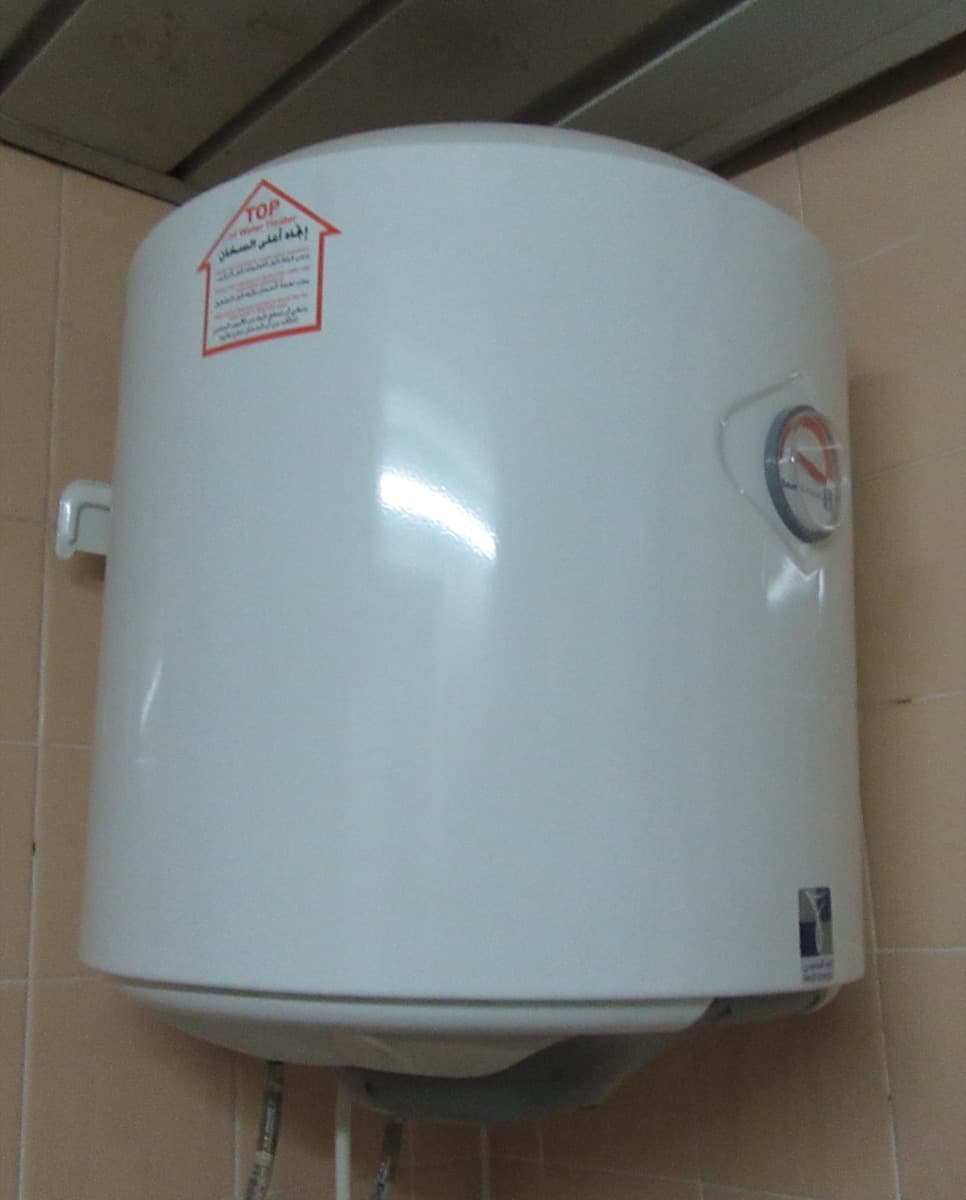
If your Tampa Bay water heater is failing every 5 years instead of the expected 10, you are not unlucky. Tampa Bay tap water has high hardness and elevated dissolved solids that accelerate sediment buildup at the bottom of the tank and chew through the sacrificial anode rod. Both kill water heaters fast. Here is the chemistry behind it and how to extend the life of your next one.
The national average life of a tank-style water heater is 10 to 12 years (gas) or 8 to 12 years (electric), per the ASHRAE handbook and major manufacturer warranty data. In Tampa, St. Petersburg, Clearwater, Brandon, and the broader Tampa Bay metro, the same units regularly fail at 5 to 7 years. The cause is not Florida humidity or a bad brand. The chemistry of Tampa Bay tap water is doing what any hard, mineral-rich water does, only faster.
The Anode Rod: Sacrificial Chemistry That Protects Your Tank
Every tank-style water heater contains a magnesium or aluminum rod threaded into the top of the tank. This is the anode rod, and it exists to corrode instead of your steel tank. The interior of a water heater tank is glass-lined steel, and the lining has microscopic gaps and chips from the day the tank leaves the factory. Without an anode rod, dissolved oxygen and mineral ions in the water would attack those exposed spots and rust the tank from the inside out within a year or two.
The anode rod works on galvanic corrosion. Magnesium and aluminum are more electrochemically active than steel, so the rod corrodes preferentially and sacrifices itself to protect the tank. When the rod is fully consumed, the steel becomes the new sacrificial surface. From there, tank failure is typically 6 to 18 months away.
In national-average water, a magnesium anode rod lasts 4 to 6 years and an aluminum rod lasts 6 to 8 years. In Tampa Bay water, those numbers compress hard. See our Tampa Bay sulfur smell guide for the related anode-bacteria interaction that produces rotten-egg odors at the hot tap.
Why Tampa Bay Water Is Harder on Heaters Than the National Average
Tampa Bay Water, the regional wholesale supplier, blends groundwater from the Floridan Aquifer with surface water from the Hillsborough River, Tampa Bypass Canal, and the C.W. Bill Young Regional Reservoir, plus desalinated seawater from the Apollo Beach plant during dry season. City of Tampa Water sources separately from the Hillsborough River. Member utilities including Pinellas County, Hillsborough County, Pasco County, and the City of St. Petersburg deliver that supply to homes across the region.
The result at the tap is water that typically tests at 8 to 15 grains per gallon depending on which utility serves you and which season it is, with total dissolved solids commonly in the 250 to 400 mg/L range. Lakeland, Plant City, Spring Hill, and direct Floridan Aquifer wellfield addresses can run 20 to 30 gpg, well into the "very hard" category by Water Quality Association standards. The national average is closer to 13 gpg, and the median U.S. water heater never sees water above the moderate hardness threshold.
Two things in that chemistry directly attack a water heater. Dissolved calcium and magnesium precipitate as solid scale when heated above roughly 140 degrees Fahrenheit. And the elevated TDS, which includes chlorides, sulfates, and bicarbonates, accelerates the galvanic activity that consumes the anode rod. Both factors compound the longer the unit runs.
The Sediment Trap: Calcium Carbonate at the Bottom of the Tank
The most visible failure mode of a Tampa Bay water heater is sediment accumulation. Here is what actually happens: cold water enters the bottom of the tank through the dip tube. As the burner (gas) or lower element (electric) heats that incoming water, dissolved calcium and magnesium drop out of solution and precipitate as calcium carbonate, the same chemistry that produces white scale on your faucets. The solid particles are denser than water and settle to the bottom of the tank.
On 10 grain per gallon water, a 50-gallon tank running typical household demand accumulates roughly 1 to 3 pounds of sediment per year. On 15 gpg water, that number climbs to 3 to 6 pounds per year. After 4 to 5 years without flushing, the bottom of the tank can hold 15 to 30 pounds of mineral sludge. That sludge is functionally a layer of insulation between the gas burner and the water above it, or a crust baked onto the lower electric element.
The downstream effects all hurt the heater. Gas units cycle the burner longer to push heat through the insulating layer, which overheats the tank bottom and accelerates fatigue cracking at the welds. Electric lower elements burn out as they are entombed in mineral crust. Tankless units, often promoted as a Tampa Bay "solution," are actually more vulnerable: the narrow heat exchanger passages clog with scale within 1 to 2 years on untreated water.
Signs you are deep into the sediment cycle: a rumbling or popping sound when the burner kicks on (steam pockets forming under the sediment crust), longer recovery times, the bottom inches of the tank running noticeably cooler than the top, and rust-tinted hot water at first draw.
The TDS Factor: More Dissolved Minerals, Faster Everything
Total dissolved solids is a measure of every ionic and molecular substance dissolved in water, including calcium and magnesium, plus sodium, chlorides, sulfates, bicarbonates, silica, and trace metals. Tampa Bay water typically lands in the 250 to 400 mg/L range. The EPA secondary standard is 500 mg/L, so the utility is well within spec, but "in spec" is not the same as "easy on appliances."
Elevated TDS amplifies every chemical reaction inside a water heater. The galvanic cell that protects the steel runs faster because more dissolved ions carry current between the anode rod and the tank wall. Corrosion of any exposed steel runs faster for the same reason. Sulfate-reducing bacteria deposit faster because sulfate ions are part of the dissolved load (this is the source of rotten-egg odors at the hot tap). Chloride ions pit through stainless steel components like dip tubes and pressure relief valves over time.
The compounded effect: in Tampa Bay water, a magnesium anode that would last 4 to 6 years in soft, low-TDS water typically lasts 2 to 3 years. Once the rod is consumed, the rust-through clock is 12 to 18 months. Add the sediment problem on top, and a 12-year-rated heater realistically delivers 5 to 7 years.
How Softening Extends Water Heater Life by 3 to 5 Years
The fix for both problems is the same. An ion-exchange water softener installed upstream of the water heater removes the calcium and magnesium that drive both scale accumulation and the galvanic load on the anode rod. The treated water entering the heater carries near-zero hardness, which means almost no calcium carbonate precipitates out when heated and almost no sediment settles at the bottom of the tank.
Manufacturer warranty data tells the story. Both A. O. Smith and Bradford White publish extended-warranty conditions that require softened water for the longest available coverage. The Water Quality Association references a Battelle Memorial Institute study commissioned by the Water Quality Research Foundation that documented gas water heaters running on softened water maintaining manufacturer-rated efficiency over 15 years, while comparable units on hard water lost 25 to 30 percent of efficiency and failed years earlier.
Real-world Tampa Bay area numbers track that research. Heaters installed with a properly sized whole-house softener and an aluminum or powered-titanium anode rod routinely make it to 10 to 13 years before requiring replacement, against the 5 to 7 year baseline for unprotected installs. The 3 to 5 year life extension is the most consistently reported benefit of softening in the region, ahead of the soap-savings and skin-comfort improvements that show up at fixtures.
The secondary benefit is energy. The U.S. Department of Energy has documented that scale buildup on a water heater heating surface can increase energy consumption by 25 to 40 percent. Eliminating scale at the source eliminates that efficiency penalty for the life of the unit. Read our whole-house water systems pillar for sizing and stack details, and our water softener services page for the install process.
Get a free Tampa Bay water test
No-obligation on-site testing with hardness, chloramine, pH, TDS, and iron measured at your kitchen tap.
Choosing the Right Next Heater for Tampa Bay Water
If your current heater is past 6 years and showing rumbling, cooler-than-normal output, or visible rust at fittings, you are on the runway to replacement. A few choices specifically matter for Tampa Bay water chemistry.
Tank vs tankless. Tank units handle untreated Tampa Bay water more forgivingly because sediment has somewhere to settle before reaching the heat-transfer surface. Tankless units force every gallon through narrow exchanger passages that clog quickly without softening. If you go tankless here, a softener upstream is mandatory to hit the rated 15 to 20 year life.
Gas vs electric. Gas recovers faster and runs cheaper at Florida natural gas rates, but the burner sits directly below the sediment layer, so it takes the hardest hit. Electric is slightly more sediment-tolerant because the lower element is partway up the wall, but the lower element still burns out 2 to 3 times faster on untreated hard water.
Anode rod choice. Specify aluminum or powered titanium rather than factory-default magnesium. Magnesium reacts faster with sulfate ions in Tampa Bay water, shortening rod life and producing the hydrogen sulfide that causes rotten-egg odor at the hot tap. Powered titanium rods do not sacrifice at all and last the life of the tank.
Drain valve upgrade. The plastic factory drain valve clogs with sediment within 2 to 3 years and becomes unusable for the annual flush. Specify a brass full-port ball-valve drain at install.
Recommended Method
| If your situation is... | The right next step is... | |------------------------------------------------------------------|----------------------------------------------------------------------------------------------------------| | Current heater 5 to 7 years old, no softener, rumbling at burner | Flush the tank, check the anode rod, install a whole-house softener before the next replacement | | Current heater past 8 years, rust at fittings or drain valve | Plan replacement within 12 months, specify brass drain valve and aluminum anode, install softener first | | New construction or recent replacement, no softener yet | Install softener now, swap magnesium anode for aluminum, schedule annual flush | | Considering tankless on untreated Tampa Bay water | Do not install tankless without softening upstream; the heat exchanger will not last | | Already have softener but heater still failing fast | Check softener bypass valve, confirm regeneration cycle, test outlet hardness, inspect anode rod |
Call a Professional if...
Some failure signs cross the line from maintenance to safety and need a licensed plumber or water-treatment installer immediately:
- Visible water at the base of the tank or drip-staining on the floor under the heater - A whistling, hissing, or steam-release sound from the temperature and pressure relief valve - Brown or rust-tinted hot water that does not clear after running for 30 seconds - Gas smell near the unit at any time (evacuate first, then call the gas utility) - A tank that produces no hot water at all on a fresh recovery cycle - Sediment so thick the drain valve will not open or pass water during a flush
For any of the above, do not delay. A leaking or failing water heater can flood a Florida garage or utility room in hours. Call Pure Viva at (941) 367-2354 for a same-week assessment, or use our contact form.
Frequently Asked Questions
How often should I flush my water heater in Tampa Bay? Annually at minimum. Twice a year is better if you do not have a softener. The flush removes settled sediment before it builds into a thick crust. A 5-minute flush with the drain valve open and the cold inlet pulsing is enough on a softened unit; a fully sediment-loaded tank may need an hour and a wet-vac to break up the crust.
Will a salt-free conditioner protect my water heater? Partially. Template-assisted crystallization keeps minerals in a form that bonds less aggressively to surfaces, which helps with visible scale. It does not remove calcium and magnesium and does not reduce the galvanic load on the anode rod. For full water heater protection, an ion-exchange softener is the only complete answer.
Does my Tampa Bay city water report list the hardness? Yes, in the annual Consumer Confidence Report your utility mails or emails by July 1. Read our CCR reading guide for how to find the hardness number and what it means. You can also pull utility-by-utility hardness data here.
My heater is only 4 years old. Is it too late to add a softener? No. Installing a softener now stops new scale accumulation immediately and dramatically slows further anode rod corrosion. You can also have the anode rod inspected and swapped at the same visit, which resets the corrosion clock on the tank. Most heaters with active sediment but no rust-through respond well to a flush plus softener plus anode swap.
What is the difference between an aluminum and a powered titanium anode rod? Aluminum is a passive sacrificial rod that corrodes slower than magnesium and produces less hydrogen sulfide odor. Powered titanium rods use a small electrical current to create the protective cathodic effect without sacrificing material, so they last the life of the tank and produce no odor. Aluminum is the budget upgrade; powered titanium is the long-term answer.
Is Tampa Bay tap water bad? No. The utilities meet all EPA primary drinking water standards. The chemistry that hurts water heaters (hardness and TDS) is regulated only as a secondary aesthetic and equipment-protection concern, not a health concern. The water is safe to drink straight from the tap. It is just hard on appliances over time.
Next Steps
The first step is a free on-site water test. We measure your hardness in grains per gallon, free and total chlorine, TDS, pH, and iron, walk your utility area to inspect the existing heater and softener loop, and write a proposal sized to your actual chemistry. The visit is free and there is no obligation. Call (941) 367-2354, use our contact form, or browse city pages for Tampa, St. Petersburg, Clearwater, Brandon, or Lakeland. For Sarasota County readers, see our Sarasota water quality guide. For the full Tampa Bay water context, see our Tampa Bay water quality pillar. If you are weighing the kitchen-tap drinking water side as well, read the RO cost breakdown and the reverse osmosis pillar.